TL;DR
Market to clients and candidates as two separate jobs. Start with the clients you already have, because they're the cheapest work to win back. Make your consultants visible on LinkedIn, keep your job pages right for Google for Jobs, and check whether AI tools name you. Plan on a few hours a week from the owner, and record where every new client came from.
Why trust this page: I'm a one-person marketing consultant with twelve years in sales, including running a team of over 20 on the phones. I've built websites for two recruitment firms, with job boards and job markup. I sell marketing, so I have an interest, and I'll say where you don't need to pay anyone.
This matters more than usual right now. The ONS says UK vacancies fell to 691,000 in July to September 2026, the lowest outside the pandemic since 2014, and that smaller firms may be holding back because of labour costs. Fewer live roles means more agencies chasing each brief, so the agencies clients already know get the call.
Marketing a recruitment agency means two jobs: clients and candidates
A recruitment agency markets to two audiences who want different things. Clients want the right person quickly and with little risk. Candidates want a better job and someone honest to deal with. Mixing them in one newsletter or one set of posts dilutes both. Plan them separately, and never count a candidate sign-up as a client lead.
| Clients | Candidates | |
|---|---|---|
| What they want | The right hire, fast, with little risk | A better role and straight answers |
| Where they look | Their network, LinkedIn, Google, AI tools, past suppliers | Job boards, Google for Jobs, LinkedIn, referrals |
| Best channels | Existing clients, consultant LinkedIn, sector pages, calls | Accurate job pages, your database, referrals |
| What counts as a lead | A call or meeting about a live or likely role | A suitable application or registration |
Start with the clients you already have
The cheapest new work is from clients who've used you before. A lapsed client already trusts you, so one useful message can restart the conversation. Most small agencies have dozens of these sitting in the CRM, untouched since the last placement.

- Tidy the list: tag every past client by sector, last placement date and the person who hired. Clean out duplicates and people who've left.
- Send something useful: a short note on what you're seeing in their sector, such as pay rates or how fast roles are filling. One email a month at most.
- Ask after every placement: at 90 days, check the hire is going well and ask who else they know who's hiring.
In sales I learned to own my warm sources instead of renting leads. One firm I worked for spent around £15,000 a month on bought-in leads, and bought leads stop when the spending does. Past clients and referrals keep coming back to you. If your follow-up is slow, start with speed to lead, and if the CRM is a mess, my small business CRM guide covers the options.
Make your consultants the brand on LinkedIn
For a small agency, clients buy from the consultant they know. A hiring manager is more likely to call someone whose posts they've read for months. Each consultant's profile should say who they place and where, in plain words a client would use.

- Time: about 30 minutes a week each: one post and a few thoughtful comments on clients' posts. That's my working estimate, not a benchmark.
- What to post: what you're seeing in your sector, a placement story (with permission), and a straight answer to a question clients keep asking.
- Tone: write like you talk. On the phones, the people who did best sounded like a normal conversation, and the same works in a post.
Recruitment agency SEO: Google and Google for Jobs
Recruitment agency SEO does two jobs: it gets your agency found when a client searches for a specialist, and it gets your vacancies into Google's job search. Both take months, so start now and let LinkedIn and reactivation carry you meanwhile.
- One page per sector you place in, written for the hiring manager: roles you fill, areas you cover, how fast you shortlist, what it costs to work with you. Avoid near-identical pages for every town.
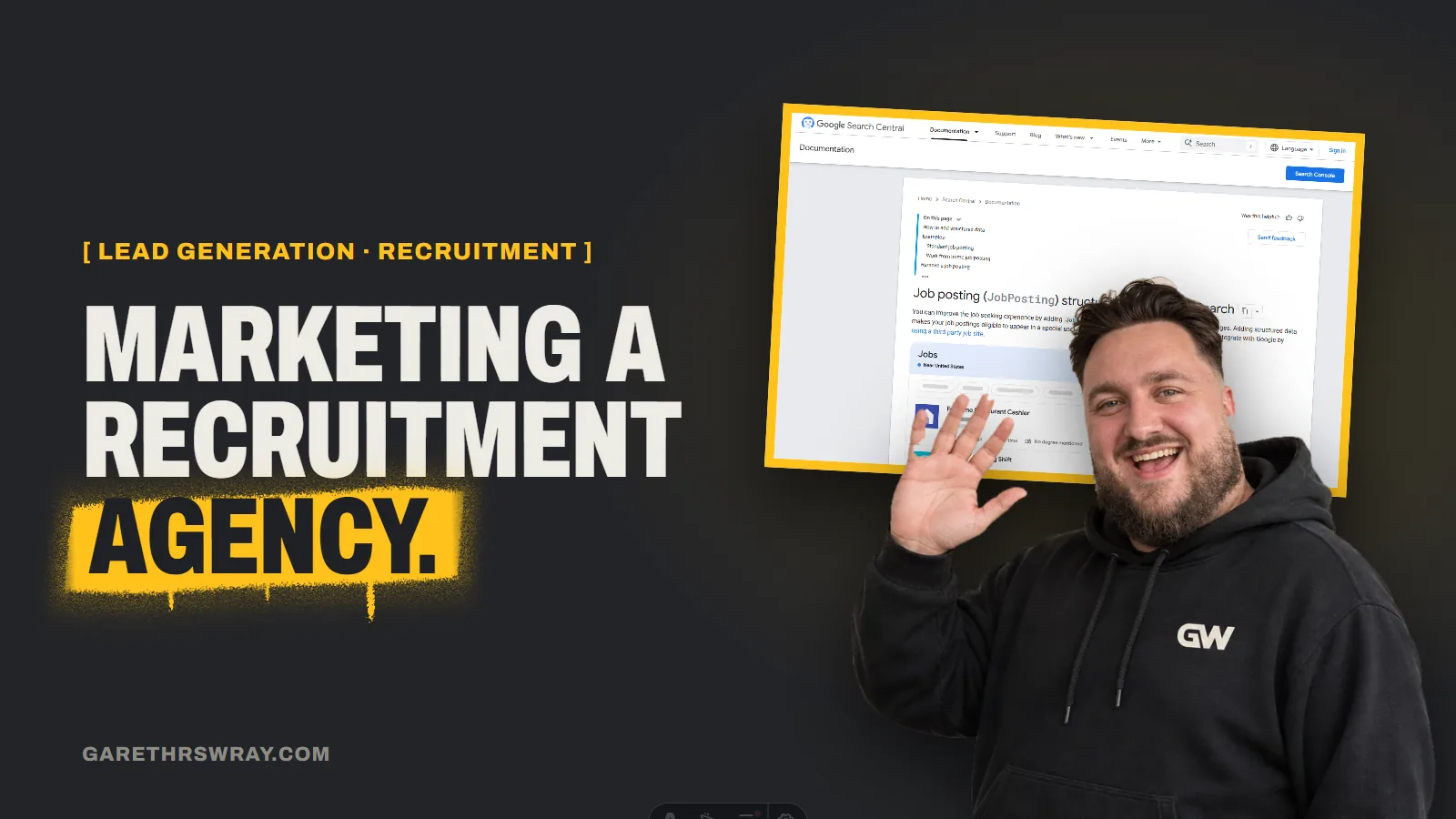
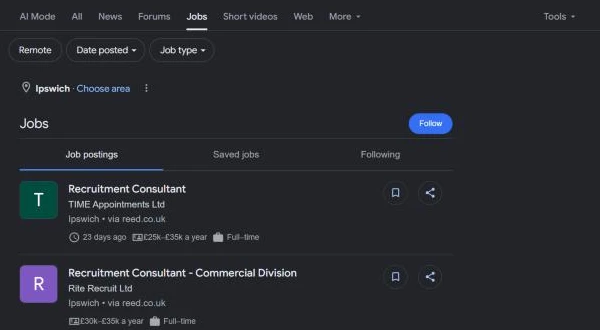
- Mark up your job pages. Google's job posting markup lets your own vacancies appear in its job search. If you're hiring for an unnamed client, Google lets you set the hiring organisation to "confidential".
- Take filled jobs down. Google says failure to deal with expired jobs in time "may result in a manual action", which can hit the whole site. Expire them the day they're filled.
- Tell Google about new jobs. Google recommends its Indexing API for job pages, plus a sitemap for the rest of the site.

When I built sites for two recruitment firms, the job board and the expiry rules took more care than the design. A feed that leaves filled roles live annoys candidates and risks the penalty above.
Would ChatGPT recommend your agency?
Probably not yet, and you're not alone. One UK study of recruitment agencies by Type A, a firm that sells AI visibility work, found 179 of 227 firms were named in no AI answer. Only 12 of 114 small firms were named, against 13 of the 15 largest. Repeated asks of the same question overlapped by only 38%, so treat any single check as a snapshot.
My own study of 7,952 East Anglian firms found the same pattern across sectors: 1,364 were ever named. To check yours, ask ChatGPT, Gemini and Google's AI Mode three questions a client would ask, such as "best engineering recruitment agency in Norwich", twice each, and note who's named and which pages are cited. The GEO vs SEO guide explains what to do next.
Google Business Profile and reviews
A Google Business Profile puts your agency on the map and in local searches, and it's free. If clients and candidates don't visit your office, Google's guidelines say a service-area business should hide its address and list the areas it covers instead.
Reviews matter to both audiences. Ask placed candidates and happy hiring managers at the 90-day check, send them your direct review link, and reply to every review. Keep your name, phone number and services the same on your profile, your site and any directories.
Winning new clients without spamming
Recruitment business development works best as a short list and a steady sequence. Pick 25 target companies in your sector, then watch for reasons to get in touch: a funding round, a new HR director, a job that's been advertised for weeks.
- Lead with their problem. Open with what you've noticed about their hiring, before you mention your services.
- Space your attempts out over a few weeks and change the channel: a call, then an email, then a LinkedIn message. Calling the same person every day just makes them screen you out.
- Know the rules. The ICO says marketing to companies is less strict than marketing to individuals, but sole traders and some partnerships count as individuals. Screen call lists against the TPS and CTPS. The ICO notes this guidance is under review, so check it before a campaign.
How much should a recruitment agency spend on marketing?
There's no authoritative UK benchmark. Marketing firms that sell to recruiters often suggest 5 to 10% of net fee income, but that's their view, not a survey. For a 5 to 20 person agency, the bigger cost is time. My working estimate:
- 5 people: about 3 to 4 hours a week from the owner, plus 30 minutes a week from each consultant on LinkedIn.
- 10 people: about 4 to 6 hours a week from the owner or a nominated person.
- 20 people: about a day a week, which is when outside help or a part-time marketer starts to pay.
Cash costs can stay low: your CRM, a free or cheap email tool, and your website. If you hand it over, I do this on a monthly plan from £995 a month, with bigger builds such as a new website on Growth Desk at £1,950 a month. Whoever you use, ask what they'll do each week and how they'll show it brought in clients.
A 90-day plan for a 10-person agency
| Weeks | What to do | Owner | Hours a week |
|---|---|---|---|
| 1 to 2 | Pick one or two sectors to lead with. Tidy the CRM and tag past clients. | Owner | 5 to 6 |
| 3 to 4 | Rewrite consultant LinkedIn profiles. Set up or fix the Google Business Profile. | Owner, each consultant | 4 to 5 |
| 5 to 8 | One email a month to past clients. Weekly posts from each consultant. Fix job page markup and expiry. | Owner, consultants | 4 to 5 |
| 9 to 12 | Write one sector page. Run the AI test. Start a 25-company target list. | Owner | 4 to 6 |
| Week 13 | Count client meetings and new briefs by source. Drop what brought nothing. | Owner | 2 |
How to tell which marketing is working
Record where every new client came from, in the CRM, the day they first get in touch. Likes and views don't pay the bills. The numbers that matter are client meetings, new briefs and placements, split by source: past client, referral, LinkedIn, website, call. After 90 days, put your hours where the briefs came from. If one channel took ten hours and brought nothing, stop it.
The practical summary
Marketing a recruitment agency without a marketer comes down to a few habits: keep in touch with past clients, make your consultants visible, keep job pages accurate, get your agency found by Google and AI tools, and track where each client came from. Start with three to six hours a week and the clients you already have. If you'd like it run for you, see my lead generation services, or book a free 15-minute look and I'll tell you where I'd start.
Fair questions
What is the best way to market a recruitment agency?
Treat clients and candidates as two separate jobs. For clients, start with the ones you already have, make your consultants visible on LinkedIn and make your website answer what a hiring manager asks. For candidates, keep job pages live, accurate and marked up for Google for Jobs.
How much should a recruitment agency spend on marketing?
There's no authoritative UK benchmark. Agencies selling marketing to recruiters suggest a share of net fee income, often 5 to 10%. For a 5 to 20 person agency, the bigger cost is usually time: plan on a few hours a week from the owner, plus 30 minutes a week from each consultant.
Does SEO work for recruitment agencies?
Yes, for two things: client searches such as "construction recruitment agency in Suffolk", and your own job pages in Google for Jobs. It takes months, so pair it with LinkedIn and client reactivation, which bring work in sooner.
Should a recruitment agency use LinkedIn ads?
Only once the basics work. For a small agency, consultants posting from their own profiles and working their network usually beats paid ads on cost. Test ads with a small, capped budget aimed at one sector, and judge them on the client conversations they produce.
Can I email companies without their consent?
UK rules are less strict for marketing to companies than to individuals, but sole traders and some partnerships count as individuals, and data protection law still applies to named contacts. Calls must be screened against the TPS and CTPS. Check the ICO's current guidance, which is under review.